
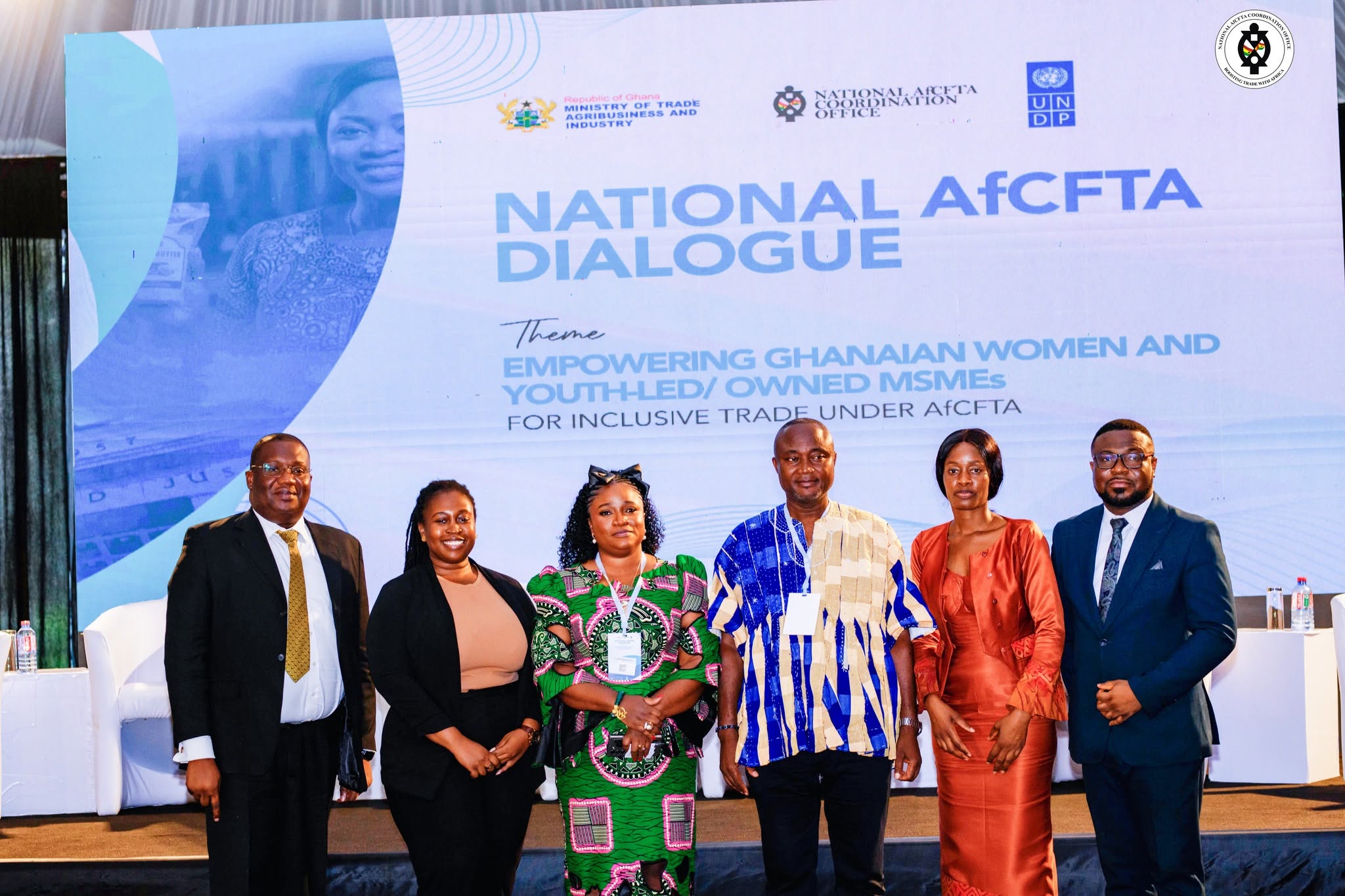


Article 7 of the AfCFTA Protocol mandates the ‘Participation of Women and Youth in Trade Policy Formulation.’ and we put this into practice. The National AfCFTA Dialogue was organised by the National AfCFTA Coordination Office, the Ministry of Trade Agribusiness and Industry, and UNDP Ghana under the theme “Empowering Ghanaian Women and Youth-Led/Owned MSMEs for Inclusive Trade under the AfCFTA,” was a crucial step following two regional consultations earlier this year.
Our collective mission: to harness the strategic dividends of the AfCFTA Protocol on Women and Youth in Trade and to shape Ghana’s national implementation strategy. The National Coordinator of the National AfCFTA Coordination Office, Mr. Benjamin Asiam reiterated the Coordination Office’s commitment to ensuring that the necessary support needed by Ghanaian businesses is galvanised to their advantage through public-private partnership amongst others.He also referenced the number of engagements including regional dialogues which preceded this national Dialogue as efforts towards aligning policy directions with realities on the ground.

Our Team Lead – Peter Adetor was honoured to moderate the two high-level panel discussions at the pivotal National AfCFTA Dialogue focused on de-risking finance for Women, Youth & SMEs in cross-border trade. The conversations were insightful, action-oriented, and underscored the undeniable role of our dynamic women and youth entrepreneurs in driving sustainable and inclusive continental trade. It’s clear that with the right policies, capacity building, and access, Ghanaian MSMEs are poised to be the bedrock of our AfCFTA success.
The Trade Regulatory Assessment Gap Analysis and Recommendation Report was also presented by Mr. Gabriel Kofi Darke – Ministry of Trade, Agribusiness and Industry. The report reveals Ghana’s regulatory gaps in trade, services, and women/youth inclusion. Lessons from Kenya (digital single window, RoO desks), Rwanda (services strategy, gender‑inclusive finance), and Nigeria (procurement quotas, youth funds) offer proven reforms. Closing these gaps will unlock AfCFTA benefits and secure Ghana’s early‑mover advantage in East Africa.